

Spotted Eagle Ray
The Ocean’s Graceful Glider

With polka-dotted wings and effortless flight, this ray dances through tropical waters—connecting reefs, seagrass, and sandy flats in silent synchrony.
Introduction
Elegance in Motion
The spotted eagle ray (Aetobatus narinari) is one of the ocean’s most visually stunning animals. With its wide, wing-like pectoral fins and white-spotted back, it glides through shallow waters like a bird in flight.
Often seen cruising above coral reefs or over sandy seabeds, it embodies grace and mystery—offering fleeting encounters that leave lasting impressions.
Unlike stingrays that bury themselves in the sand, eagle rays soar. They cover long distances in search of food and mates, linking ecosystems as they go.
What Makes It Iconic
Polka Dots & Power
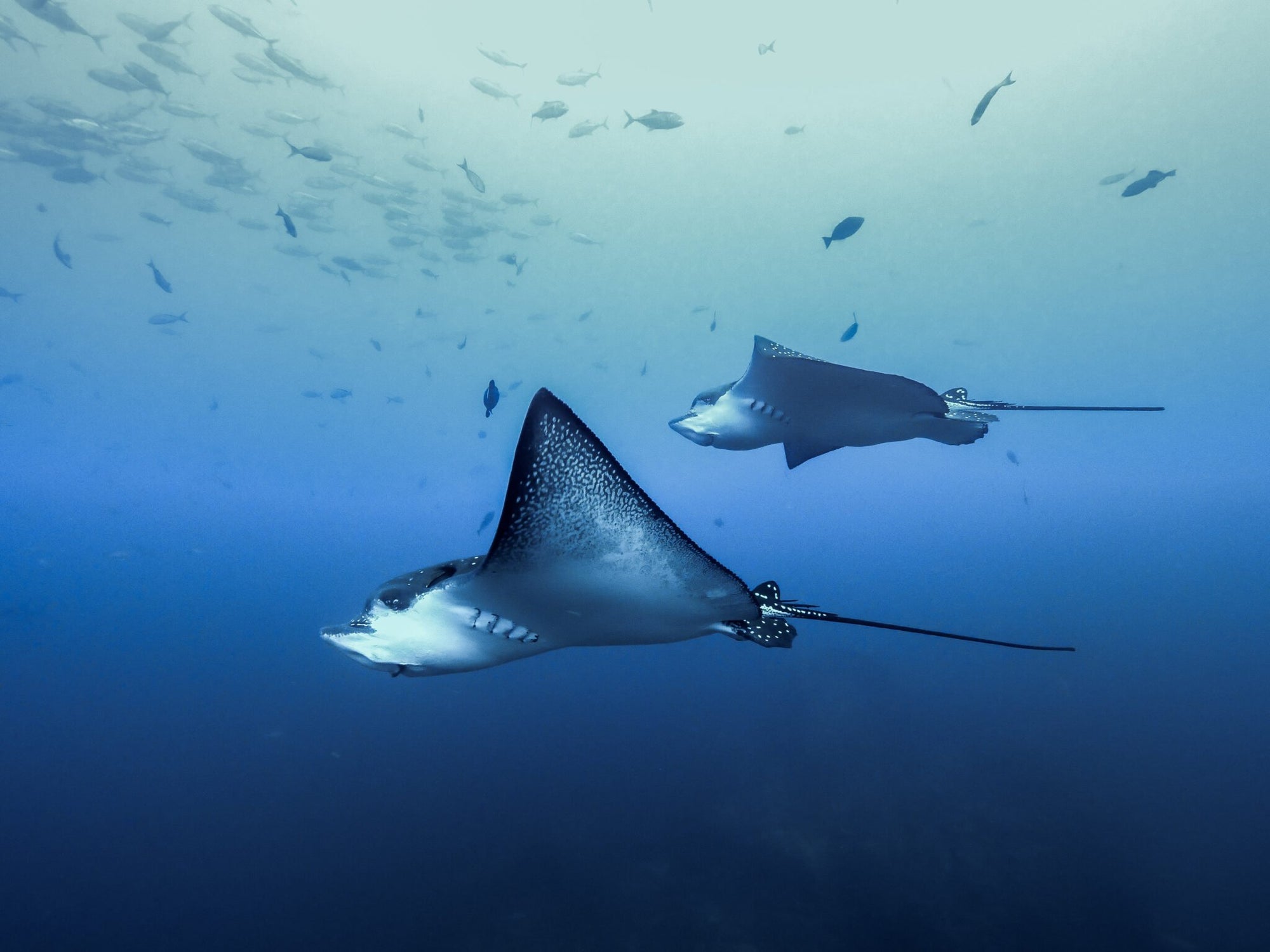
Spotted eagle rays are instantly recognisable by their white spots, pointed snouts, and long whiplike tails. Despite their delicate appearance, they’re strong swimmers and expert foragers—cracking open molluscs with powerful jaws.
They also leap from the water in dramatic bursts, possibly to evade predators or remove parasites. Whether cruising in solitude or travelling in small groups, they captivate all who see them.


Fun Fact
Spotted eagle rays can reach up to 3 metres in wingspan—and have been seen jumping up to 2 metres out of the water!
Ecological Role
Reef Connectors and Sediment Stirrers
Eagle rays use their snouts to dig in sand and sediment for buried prey, such as clams, snails, and crustaceans. This feeding behaviour:
- Aerates the seafloor and keeps benthic communities dynamic
- Helps cycle nutrients between sediment and water
- Supports coral reefs and seagrass ecosystems by regulating invertebrate populations
They also move between habitats, acting as mobile links between coral reefs, lagoons, and coastal flats.


Conservation & Threats
Under Threat, Understudied
While listed as Near Threatened by the IUCN, spotted eagle rays face multiple pressures:

Marine Pollution
including heavy metals and plastics

Bycatch
in gillnets and trawl fisheries

Habitat loss
especially in coral reefs and seagrass beds

Overfishing
in parts of their range for meat or aquarium trade
Because they’re elusive and wide-ranging, populations are hard to monitor—making protection more difficult.

Did you know?
Eagle rays give birth to live young. A pregnant female can carry up to 4 pups, developing inside individual egg cases within her body.
Hope & Action
Gliding Toward Protection
Conservation efforts for eagle rays are growing, including:
- Legal protections in marine sanctuaries and MPAs
- Sustainable fishing reforms and bycatch reduction strategies
- Ecotourism awareness that celebrates live sightings, not capture
- Increased research into migration patterns and population health
Because they range widely, international cooperation is key to their survival.

Why they Inspires Us
Wings of Wonder
The spotted eagle ray reminds us that beauty and function go hand in hand. It shows us how delicate movement can create deep impact—keeping habitats healthy with every graceful glide.
By protecting this species, we protect the balance between land and sea, coast and coral.

Eagle Ray Collection


Species Overview

Species ID Card
Eagle Ray
Want to take this species with you? Download our printable ID card to keep learning, share with others, or use in your classroom or ocean journal.
NEXT SPECIES
The Ocean’s Striped Regulator: Tiger Shark
Powerful, adaptable, and endlessly misunderstood. Up next: uncover the truth about this apex predator and the vital role it plays in keeping marine ecosystems in balance.


